

If you are a Deep Winter, the wrong dark polish can still make your hands look dull. Your best shades need more than depth. They should also feel cool, clear, and rich.
Black cherry, deep plum, navy, emerald, and blue-based red usually suit your palette far better than warm burgundy, beige, rust, or soft pastels.
The page will help you spot the right shades and avoid buying another bottle that stays unused. Let’s start!
Table of Contents
About the Deep Winter Color Palette
In the 12-season color system, Deep Winter is cool, dark, and strongly saturated. Depth is the main feature, but the colors still need a cool or cool-neutral base.
General Winter palettes also rely on clarity and contrast. That is why black, navy, jewel green, cool red, fuchsia, and crisp white tend to fit better than muted earth tones.
The easiest way to understand a Deep Winter color palette for nail polish is to check three things.
1. Is the color deep enough?
Deep Winter can carry shades that look almost black from a distance. Black cherry, aubergine, ink blue, deep teal, and charcoal all have enough visual weight.
A pale wash of color may look separate from the rest of your coloring, especially when it is also muted.
2. Does it lean cool?
A cool shade has more blue, violet, or neutral depth than orange, yellow, or golden warmth.
A blue-red is usually safer than tomato red. Blackberry is usually safer than brick. Pine or emerald is usually safer than olive.
Winter color guides commonly include black, dark navy, charcoal, indigo, dark emerald, fuchsia, raspberry, and blue-based greens.
3. Is the color clear rather than dusty?
Deep does not mean dull.
A heavily greyed plum may look flat, while a deep plum with a clean violet base can look much better. The same rule applies to navy, green, berry, and red. You want richness without a muddy brown or grey cast.
For Deep Winter nail polish, cream, gloss, pearl, metallic, and holographic finishes can all work. The base color matters more than the effect. A cool sapphire shimmer fits the palette better than a warm bronze shimmer, even when both are equally dark.
Best Nail Colors for Deep Winter
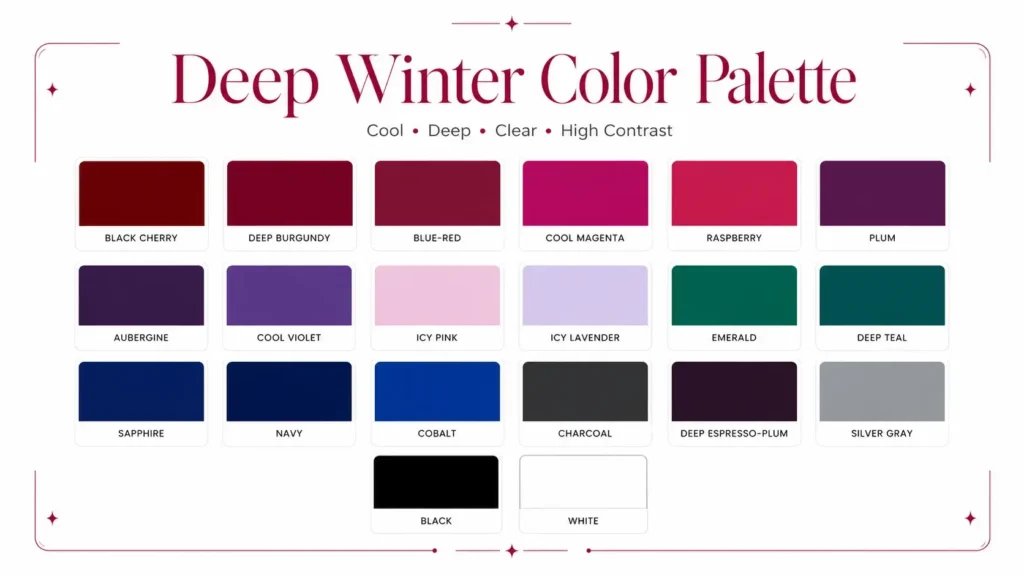
1. Black Cherry and Oxblood
Black cherry is one of the easiest Deep Winter nail colors because it sits between red, berry, and near-black.
Look for a polish that reads cool red in direct light and dark wine indoors. Oxblood can also work, but check the base carefully. Some oxblood shades lean brown, which can push them closer to Deep Autumn.
A glossy cream finish makes black cherry easy to wear for work, dinner, or everyday use. It is dark, but it does not feel as sharp as solid black.
2. Deep Plum and Aubergine
Deep plum is a strong match when it has a blue-violet base. Aubergine can run almost black on the nail, which suits the depth of this palette.
Avoid plums that look dusty mauve, warm raisin, or brown-purple.
It is also a useful choice when burgundy feels too red. It keeps the same dark effect while staying firmly on the purple side.
3. Cool Burgundy and Wine Red
Burgundy is not automatically a Deep Winter shade. The right version is cool, deep, and clear. The wrong version has obvious brick, rust, or brown tones.
Check the bottle beside something blue or silver. If the color starts looking more berry or blue-red, it may be a better fit. If it turns orange-brown beside those colors, it may be too warm.
4. Blue-Based Red
Deep Winter does not have to stay in near-black shades. A rich blue-based red can look just as strong, especially when you want a classic manicure.
Ruby, crimson, and cool true red are good to consider.
Skip reds described as tomato, paprika, rust, cinnamon, or orange-red. They move away from the cool base that holds the Deep Winter palette together.
5. Navy, Indigo, and Sapphire
Dark navy is one of the best neutral-like options for Deep Winter. It gives you the strength of black with a little more color.
Indigo and sapphire also work well when they stay deep and do not become soft denim blue. Cream navy is easy for daily wear, while pearl or fine shimmer can add light without making the color pale.
Winter palettes commonly include dark navy, indigo, cobalt, sapphire, and black.
6. Deep Emerald and Blue-Leaning Teal
Choose greens with a clear blue base. Emerald, pine, deep jade, and cool teal are usually better than olive, moss, khaki, or yellow-green.
A deep green can act almost like a neutral while giving your manicure more interest than black.
7. True Black and Charcoal
True black sits comfortably within the Winter palette. On Deep Winter, it often looks clean rather than harsh because the palette already has strong depth and contrast.
Charcoal is a softer choice, but it should still look cool and dark, not like warm smoky brown.
For the cleanest result, use a ridge-filling base coat and two thin coats of color. Black shows uneven edges quickly, so a small cleanup brush helps.
8. Cool Magenta, Raspberry, and Berry
A dark palette does not mean every nail color has to be quiet.
Cool magenta, raspberry, and blue-based berry add more brightness while still matching the season. These shades work best when they stay saturated and avoid coral or warm strawberry tones.
Winter pinks are usually strongest when they are blue-based, vivid, and free from peach or beige.
9. Silver, Gunmetal, and Cool Chrome
Silver, gunmetal, pewter, and cool chrome fit more naturally than yellow gold, copper, or bronze.
You can wear them as a full manicure, a French tip, or a thin accent over navy, black, plum, or emerald. Keep the metallic effect crisp. A silver with a clear or charcoal base will usually work better than one mixed with warm gold.
Deep Winter Nail Polish Recommendations
Here are some nail polish recommendations based on color, depth, undertone, and finish.

OPI Lincoln Park After Dark
This is a near-black aubergine cream, so it covers the deep plum side of the palette very well.
In indoor light, it can read almost black. Brighter light brings out the purple base. The shift makes it useful when you want a dark manicure that is not plain black.

Essie Wicked
Essie Wicked is a deep red burgundy color that sits in the black cherry and dark burgundy area, though the exact balance can change with your skin tone, coat count, and lighting. Two thin coats followed by a glossy top coat should give the richest result.
Pick this when you want a classic dark red that feels easy to wear through the week.

OPI Malaga Wine
Malaga Wine is a dark red cream color. It is brighter and more clearly red than Lincoln Park After Dark, so it works well when near-black shades feel too heavy. The color has enough depth for Deep Winter without losing its red identity.
It is a good option for a clean, traditional manicure with strong color.
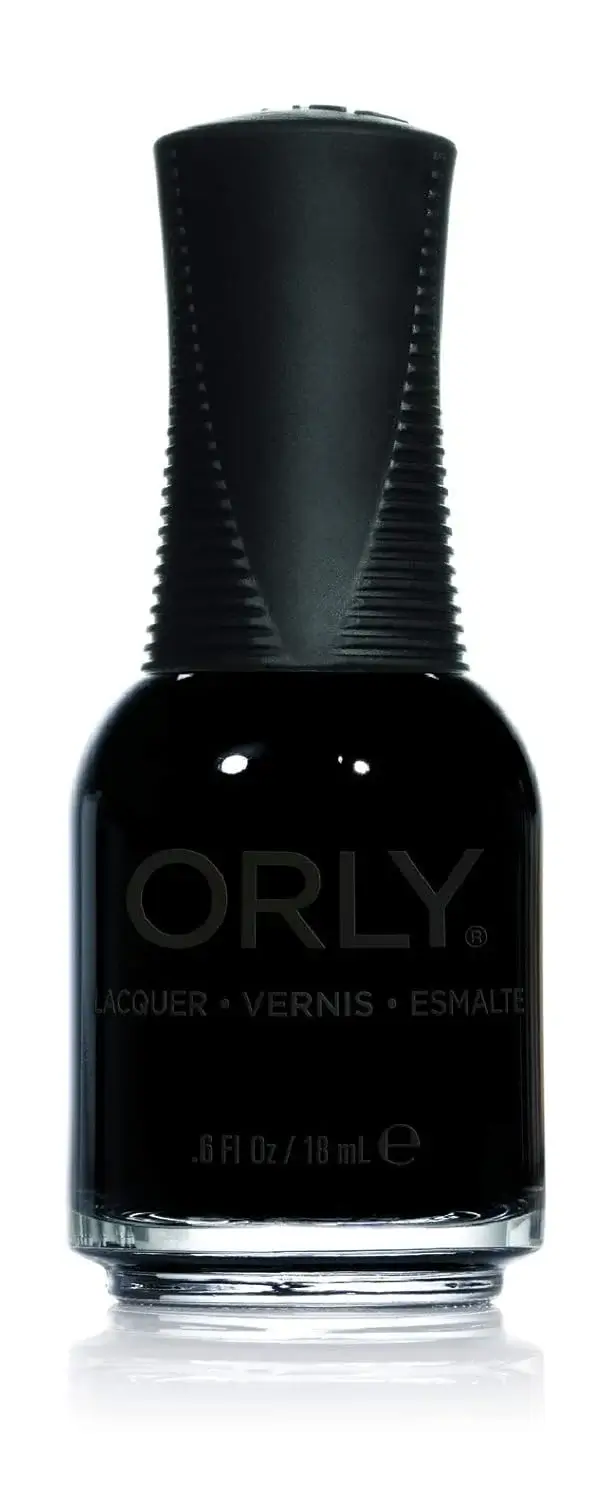
ORLY Liquid Vinyl
Liquid Vinyl is an intense black cream with full coverage.
There is no hidden brown, taupe, or warm base to work around, which makes it a direct match for the black section of the Deep Winter palette. Use thin coats because heavy black polish can gather around the cuticle line.
Add a high-shine top coat for a smooth, glass-like finish.

ILNP Cityscape
Cityscape is a true black holographic jelly rather than a flat black cream.
The jelly base gives it depth, while the holographic particles add cool sparkle. It is a good pick for evenings, events, or anyone who finds basic black a little plain.
Because it is a jelly formula, expect a more layered look than the solid coverage of Liquid Vinyl.

Essie Ice Ice Navy
Ice Ice Navy is a deep sapphire blue with a pearl finish.
It gives Deep Winter a true jewel-tone option without becoming bright cobalt or soft denim. It’s in a two-step long-wear system and can last up to 15 days when the top coat is applied again on day seven.
Choose it when you want navy with visible light and movement rather than a flat cream.

ILNP Fir Coat
Fir Coat is a dark emerald green holographic polish with a blue lean.
That blue-green balance separates a Winter green from warmer olive or moss shades. The sparkle keeps the color clear, while the dark base gives it enough depth.
This is a strong holiday shade, but it also works throughout the year if you like deep green nails.

ILNP Paisley
Paisley is a dark magenta holographic shimmer.
It covers the brighter berry side of Deep Winter without turning coral or orange. The dark base keeps it grounded, while the shimmer gives it more energy than a standard cream polish.
Pick this when plum feels too quiet but vivid pink feels too light.

OPI Yoga-ta Get This Blue!
This deep, dark blue gives you a strong navy option without looking flat or fully black.
It suits the cool depth of the Deep Winter palette and works well when you want a dark neutral with more color. The shade can look close to navy indoors, with more blue showing under direct light.
Use two thin coats and a glossy top coat for the cleanest finish.

ILNP Currant
Currant is a blackened currant purple with a creamy solid finish.
It sits between deep berry and dark plum, two of the safest color groups for Deep Winter. The near-black depth keeps it dramatic, but the purple base stops it from looking like a basic black manicure.
It is a good everyday choice for anyone who prefers dark polish without glitter or shimmer.
Nail Colors Deep Winter Should Avoid
These colors are not forbidden. They are simply less likely to match the cool, deep, and clear balance of the palette.
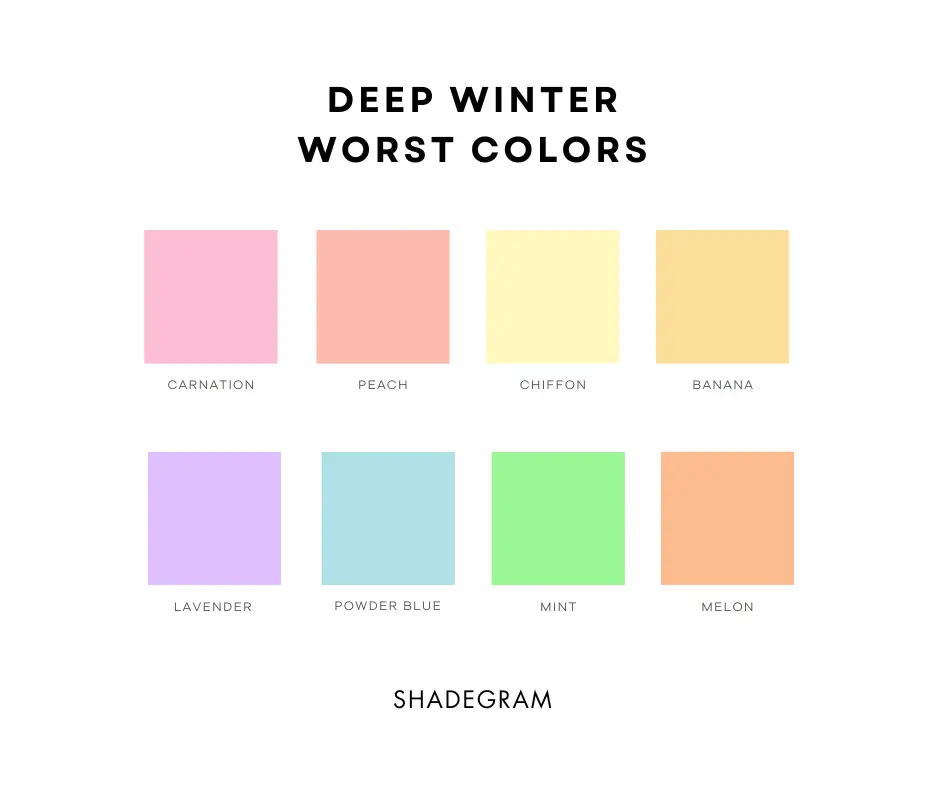
1. Warm Coral, Peach, and Orange-Red
Coral, peach, salmon, and tomato red carry visible warmth. Against a Deep Winter palette, they can look separate from the cooler coloring.
A raspberry, blue-red, or deep magenta will usually give a cleaner result.
2. Camel, Warm Beige, and Yellow Nude
A nude polish can work, but the usual peach-beige nude is not the easiest choice. It may look too warm, too light, or both.
Try cool taupe, deep rose-beige, charcoal nude, sheer cool pink, or a high-contrast French manicure with a crisp white tip instead.
3. Rust, Terracotta, Cinnamon, and Brick
These shades sit within a warmer, earthier color group. They often carry orange or brown, which can look dull beside Deep Winter colors.
Replace rust with oxblood, terracotta with cool burgundy, and cinnamon with black cherry.
4. Olive, Khaki, and Moss
Warm greens can look muddy on a palette built around cool clarity.
Search for emerald, pine, jade, blue-teal, or dark turquoise instead. The goal is not just a darker green. It is a darker green with a clear, cool base.
5. Soft Pastels
Powder pink, milky peach, dusty lavender, and pale sage may lack the depth Deep Winter usually needs.
Very icy shades can work as small accents because Winter palettes include near-white icy colors. Soft, greyed pastels are less reliable.
6. Warm Metallics
Yellow gold, copper, rose gold, and bronze can pull too warm, especially when the base is also brown.
Silver, steel, pewter, gunmetal, and cool chrome are safer choices.
7. Warm Brown and Espresso
A dark brown may seem like an easy Deep Winter neutral, but many browns carry red, orange, or golden warmth.
For the same level of depth, try black, charcoal, black cherry, aubergine, or ink navy first.
Also Read: Best Deep Autumn Nail Colors and Polish Picks
And: Find Your Perfect Polish: The 12-Season Nail Color Guide
Summing Up
The best Dark Winter nail colors are cool, deep, and saturated. Start with black cherry, deep plum, cool burgundy, navy, emerald, true black, and dark magenta.
Check the undertone before buying, because a dark polish can still be too warm or too muted.
For a small, useful collection, begin with one black cherry, one aubergine, one navy, one true black, and one jewel-tone accent such as emerald or magenta. It gives you enough range for daily wear, formal plans, and brighter looks without filling a drawer with shades that do the same job.
The palette should make choosing easier, not limit you. When a color falls outside Deep Winter and you still love it on your hands, wear it. The best manicure is the one you are happy to look at for the next several days.